Web Development
No intro video yet
Start Date: TBA
Duration: N/A weeks
Total Seats: N/A
Seats Left: N/A
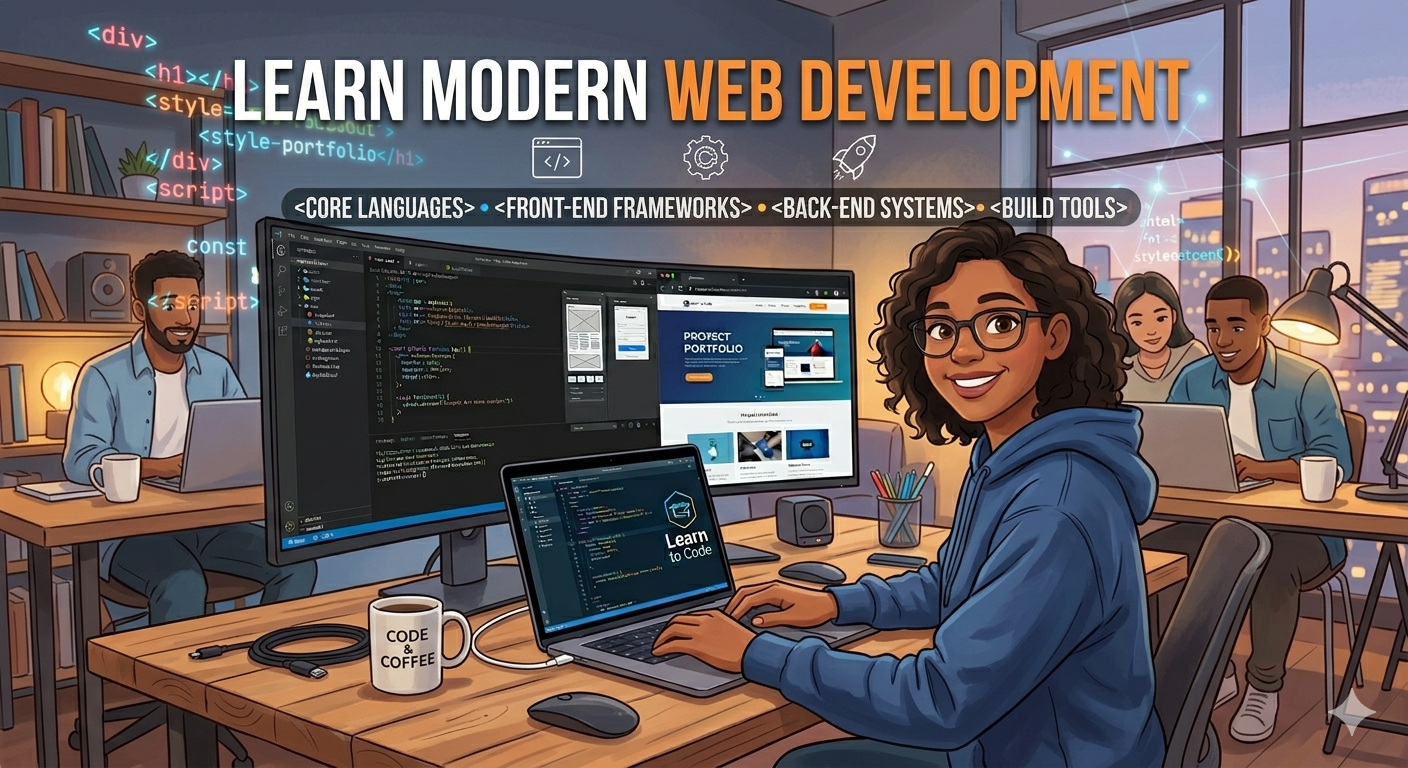
Go from zero to full-stack developer in 3 months — learning HTML, CSS, JavaScript, Python, and Flask to build and deploy real web applications. This structured course walks you through every layer of the web, starting with beautiful static pages and ending with a fully deployed, database-backed application with user authentication. What makes this course different: → Clear weekly progression from frontend basics to backend development → Mini-projects every two weeks so concepts stick through practice → Real tools used in industry: HTML5, CSS3, Bootstrap, JavaScript, Flask, SQLAlchemy → Ends with a fully deployed capstone project you can add to your portfolio By the end, you will be able to: - Design and build responsive web pages from scratch - Add interactivity with JavaScript and connect to external APIs - Build server-side applications with Python and Flask - Store and retrieve data using a relational database - Implement user registration, login, and session management - Deploy a working web application to a live server No prior coding experience required.
Who this course is for
- Complete Beginners: People who have never written a line of code but want a structured, clear path into tech.
- Aspiring Python Developers: Anyone who knows basic Python syntax and wants to learn how to apply it to the web.
- Frontend Designers: Designers who want to cross over into full-stack territory and understand how the backend operates.
What you’ll learn
- Build and style responsive web pages using HTML5 and CSS3
- Structure layouts confidently with Flexbox and CSS Grid
- Make pages mobile-friendly using media queries and Bootstrap 5
- Add interactivity to pages with JavaScript and DOM manipulation
- Consume external APIs using the Fetch API and handle JSON responses
- Build server-side web applications with Python and Flask
- Use Jinja2 templates to generate dynamic HTML pages
- Design relational database schemas and perform CRUD operations with SQLAlchemy
- Implement user registration, login, and protected routes with Flask-Login
- Validate and process HTML forms securely on both client and server
- Deploy a full-stack Flask application to a live public URL
- Build and present a complete full-stack capstone project
Course Structure
- HTML5 document structure: headings, paragraphs, links, images, lists, tables
- Semantic elements: header, nav, main, section, article, footer
- CSS selectors, specificity, and the box model
- Colors, fonts, backgrounds, and basic typography
- Positioning: static, relative, absolute, fixed, sticky
- Flexbox layout fundamentals
- Mini-project: personal portfolio static page
- CSS Grid layout system
- Media queries and mobile-first design principles
- Bootstrap 5: grid, components, utilities, and icons
- JavaScript fundamentals: variables, data types, operators, control flow
- Functions, scope, and event listeners
- DOM manipulation: querySelector, innerHTML, classList
- Mini-project: interactive to-do list (no backend)
- Arrays and objects in JavaScript
- ES6+ features: let/const, arrow functions, template literals, destructuring
- Fetch API: making HTTP requests and handling responses
- Working with JSON data
- Client-side form validation
- Local storage basics
- Mini-project: weather app using a public API
- Python essentials refresher: functions, dicts, lists, list comprehensions
- Introduction to Flask: routes, views, and the application factory pattern
- Jinja2 templates: variables, loops, conditionals, and template inheritance
- Handling GET and POST requests and URL parameters
- Flask-WTF: building and validating forms securely
- Flash messages and redirects
- Mini-project: simple Flask blog (create and list posts)
- Relational database concepts: tables, primary keys, foreign keys
- SQL basics: SELECT, INSERT, UPDATE, DELETE
- Flask-SQLAlchemy: defining models and running migrations with Flask-Migrate
- One-to-many relationships and querying related data
- Pagination and filtering query results
- Mini-project: task manager with full database persistence
- User registration and login with Flask-Login
- Password hashing with bcrypt
- Session management and route protection with decorators
- Sending JSON responses and building a simple REST endpoint
- Introduction to Git and version control basics
- Deploying to a live server (Render or PythonAnywhere)
- Mini-project: full-stack user authentication system
- Planning: wireframes, database schema, and feature scope
- Core implementation: models, routes, and Jinja2 templates
- Authentication and role-based access control
- Frontend polish with Bootstrap and custom CSS
- Testing, debugging, and handling edge cases
- Deployment to a live public URL
- Code review, documentation, and project walkthrough presentation
Instructor
Vansh Thakur
Vansh Thakur is a software engineer and educator passionate about making technology approachable for everyone. With hands-on experience across Python, C++, web development, and AI applications, he brings real-world context to every lesson. His teaching style focuses on clear structure, practical projects, and building genuine confidence.
FAQs
Do I need to know Python before starting?
Basic Python is helpful but not required. The course includes a Python refresher in Week 7 to bring everyone up to speed.
What tools and software will I need?
A laptop with Python 3, VS Code, and a web browser. All tools are free and setup is covered on day one.
Will I build real projects I can show employers?
Yes. You build mini-projects throughout and finish with a fully deployed full-stack application you can add to your portfolio.
How much time per week does the course require?
Plan for approximately 10 hours per week including lessons, exercises, and project work.
Do I need to pay for any hosting services?
No. We use free tiers of Render or PythonAnywhere for deployment. No credit card is needed.
Is this course focused on frontend or backend?
Both. You will learn the full stack: HTML/CSS/JavaScript for the frontend and Python/Flask/SQL for the backend.
Will I receive a certificate?
Yes. A certificate of completion is awarded after finishing all modules and submitting the capstone project.
Student Reviews
No reviews yet. Be the first to review!
No approved reviews yet.
Ready to start your journey?
Login to Enroll